Child Development | Wellness
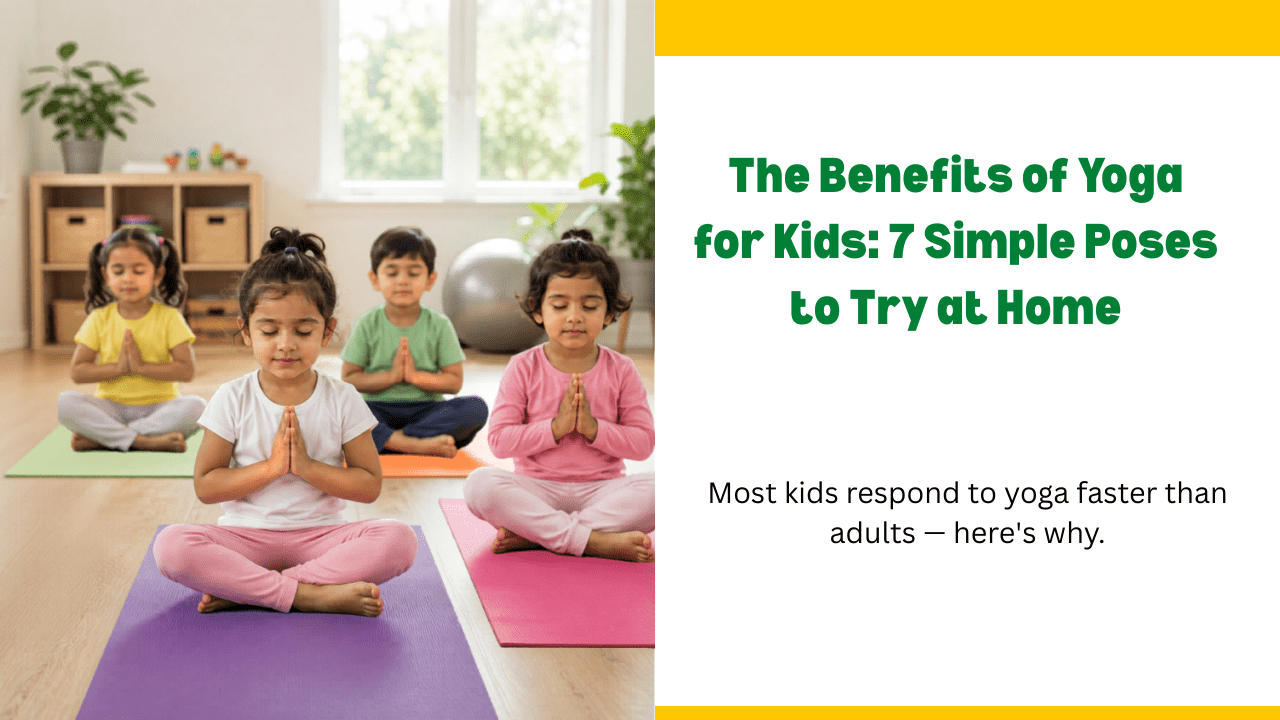
The Benefits of Yoga for Kids:
7 Simple Poses to Try at Home
A simple, research-backed practice that helps children grow stronger, calmer, and more focused — one pose at a time.
⏱ 7 min read
🧘 Ages 3–14
📋 What’s Inside
- Why Yoga Is Good for Growing Children
- Physical Benefits
- Emotional & Mental Benefits
- 7 Simple Yoga Poses to Try at Home
- How to Build a Simple Yoga Routine
- Tips for Parents
- FAQs + Key Takeaways
Yoga for kids is a mind-body practice that combines simple postures, breathing, and focus exercises to support children’s physical growth, emotional balance, and mental development. Most parents think of yoga as something adults do after a long day — but here’s what’s interesting: children actually respond to yoga faster than adults. Their bodies are more flexible, their minds more open, and habits formed young tend to stay for life.
🌟 Why Yoga Is Genuinely Good for Growing Children
The research behind kids’ yoga is stronger than most people realize. Studies show that yoga can improve children’s overall well-being, postural control, and stress management. Research has found that yoga supports physical and emotional development while helping children better understand and regulate their bodies through movement.
💡 Did You Know? Yoga has been linked to improved academic performance, better sleep quality, and greater confidence in physical abilities — especially during exam season.
Research also suggests yoga helps reduce anxiety and stress that can interfere with memory and learning. For children dealing with academic pressure, screen fatigue, and busy schedules, these benefits can have a meaningful impact on daily life.
💪 Physical Benefits: More Than Just Flexibility
Yes, yoga makes kids more flexible — but that’s only one part of the story. Regular practice helps children build a stronger, more capable body across multiple dimensions.
Research also shows that yoga can support healthy weight management in children — without the competitiveness or pressure often associated with sports.
🧘 Emotional and Mental Benefits: Calmer, More Focused Kids
This is where yoga stands apart from many other physical activities. Studies show yoga can improve emotional regulation and help children manage frustration more effectively. Kids who practice yoga regularly often become better at coping with stress and adapting to challenges.
For parents across India, where children often balance academics, extracurricular activities, and increasing screen time, yoga’s emotional benefits are especially valuable.
— Child Wellness Research
✅ Yoga Has Been Linked To:
😊 Improved Mood
😌 Reduced Anxiety
💪 Self-Confidence
🧩 Impulse Control
🧘♀️ 7 Simple Yoga Poses Kids Can Try at Home
No special equipment or yoga studio needed. Just a little space and 10–15 minutes.
🏔️ Mountain Pose (Tadasana)
Stand tall with feet together and arms by the sides. Teaches body awareness, balance, and stillness — the perfect starting pose for every practice.
🌳 Tree Pose (Vrikshasana)
Balance on one foot while placing the other against the inner leg. Improves focus and coordination — children love the challenge of staying steady.
🐱 Cat-Cow Stretch (Marjaryasana-Bitilasana)
On all fours, alternate between arching and rounding the back with each breath. Improves spinal flexibility and promotes relaxation — kids enjoy the animal theme.
🌙 Child’s Pose (Balasana)
Sit back on the heels and stretch the arms forward on the floor. A calming pose that helps children relax and release stress — great before bedtime.
⚔️ Warrior I (Virabhadrasana I)
Step one foot forward into a lunge and raise the arms overhead. Builds leg strength and confidence — children love feeling powerful in this pose.
🦋 Butterfly Pose (Baddha Konasana)
Sit with the soles of your feet together and gently move the knees up and down. Opens the hips and helps children unwind before bedtime — perfect for the evening routine.
🦁 Lion’s Breath (Simhasana)
Inhale deeply, then exhale with mouth open, tongue out, and a playful roar. Releases tension and — most importantly — makes kids laugh every single time.
📅 How to Build a Simple Yoga Routine at Home
Start small. Even 10 minutes, three or four times a week, can help build a lasting habit. Morning sessions help children begin the day with focus and energy, while evening sessions promote relaxation before bedtime.
✅ Pro Tip: Keep yoga fun by using animal-inspired pose names, playing soft music, practicing as a family, and letting children lead the session occasionally. The goal isn’t perfect poses — it’s consistency and enjoyment.
👨👩👧 Tips for Parents Starting Yoga with Kids
Parents play an important role in making yoga a positive experience for their children. A supportive environment helps children enjoy yoga and stay motivated.
🚫 Never force children into a pose
⏱ Keep sessions short and playful
🏆 Celebrate effort rather than perfection
👨👩👦 Practice together whenever possible
📅 Encourage regularity over long single sessions
🧒 Avoid comparing children with others
❓ Frequently Asked Questions
Q1. At what age can children start doing yoga?
Children can start yoga as early as 3–4 years old with simple, playful movements. Structured yoga sessions are generally suitable from age 5 onwards, when children can follow instructions more easily.
Q2. How does yoga help kids with focus and concentration in school?
Yoga improves focus by combining breathing techniques, balance exercises, and mindfulness. Regular practice can reduce stress and help children concentrate better during lessons and homework.
Q3. Is kids’ yoga safe to practice at home without an instructor?
Yes, kids’ yoga is generally safe when using beginner-friendly poses. Simple poses like Tree Pose, Child’s Pose, and Cat-Cow are easy and suitable for home practice.
Q4. How often should kids do yoga to see real benefits?
Three to four sessions per week of 10–15 minutes are enough for most children to experience benefits. Consistency matters more than duration.
Q5. Can yoga help hyperactive or anxious children?
Yes. Yoga can help anxious or hyperactive children feel calmer by promoting relaxation and improving emotional regulation. Breathing exercises and gentle poses are particularly helpful.
✅ Key Takeaways
- Yoga for kids supports physical health, emotional balance, and mental well-being simultaneously
- Children respond to yoga faster than adults — habits formed young tend to last for life
- No expensive equipment needed — just 10–15 minutes, 3–4 times a week
- Start with one simple pose today; consistency matters more than perfection
- Parents practicing together make yoga more enjoyable and effective for children
Give Your Child the Best Start in Udaipur 🎓
At Laureate High School, Hiran Magri, Udaipur, we believe in holistic child development — building strong, confident, and focused learners from the very beginning.
Read More:-