
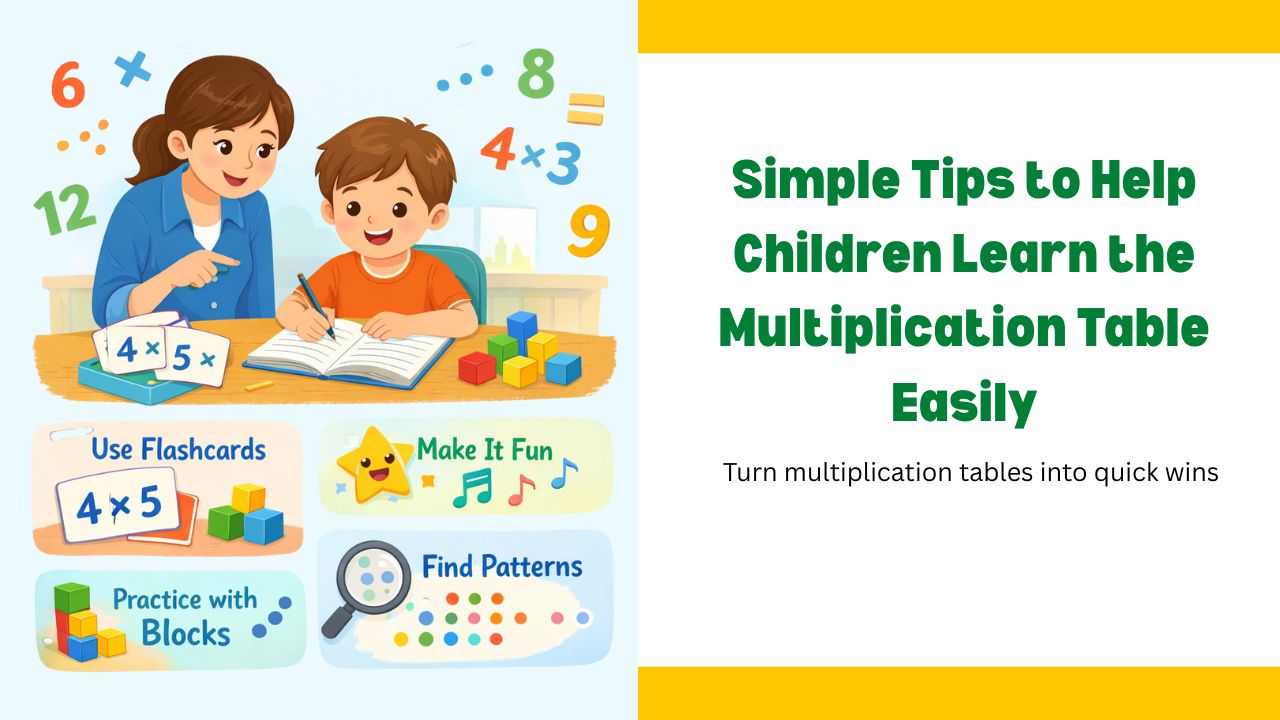
Learning the multiplication table is an important milestone in every child’s learning journey. It is one of the first steps toward building strong math skills that will help children throughout their school life and beyond. When children understand multiplication well, they become faster in solving problems and feel more confident in class.
Multiplication is not only useful in exams. Children use it in daily life, such as when sharing items, counting things in groups, or managing money during small purchases. When children are comfortable with the multiplication table, math becomes less scary and more enjoyable.
This blog will guide parents and teachers with simple tips and ideas to help children learn multiplication tables easily and with confidence.
Why Learning the Multiplication Table Matters
Understanding the multiplication table makes calculations quicker and smoother. Instead of counting again and again, children can remember answers easily once tables are learned well.
Strong table knowledge also improves logical thinking. It teaches children how numbers work together and builds a base for future topics like division, fractions, and algebra.
Children who learn multiplication tables early often feel more confident while answering questions in class. This confidence helps them develop a positive attitude toward learning math.
Common Challenges Children Face While Learning Tables
Many children find it difficult to memorize tables at the beginning. Remembering numbers in order may feel confusing.
Some children develop fear of numbers when they feel pressured to learn quickly. This fear makes learning harder.
Repetition can sometimes become boring, especially when children have to say tables again and again without understanding.
Lack of regular practice causes children to forget what they have learned. Gaps in practice make revision difficult.
Understanding these challenges helps parents and teachers support children in a better way.
Simple and Effective Tips to Learn Multiplication Tables
1. Start with Easy Tables First
Children should begin with easier tables like 1, 2, 5, and 10. These tables are simple and create early confidence. When children feel successful, they become excited to learn more. Easy tables prepare them for harder ones later.
2. Use Patterns and Simple Tricks
Many tables have easy patterns that children can notice. For example, the 5 table always ends with 0 or 5. The 9 table follows a clear number pattern. These small tricks make learning fun and easier.
3. Use Charts and Visual Aids
A colorful multiplication table chart on the wall helps children recognize numbers quickly. Seeing the table daily builds memory naturally. Children slowly start remembering answers without pressure. Visual learning is very powerful.
4. Practice Skip Counting
Skip counting helps children understand how multiplication works. Counting by 2s, 3s, or 5s builds a strong base. It makes learning feel like counting, not memorizing. This also improves number sense.
5. Break Big Tables into Parts
If a table looks difficult, break it into small sections. Learning three to four numbers at a time feels easy. Children can revise small parts daily instead of feeling overwhelmed. Step-by-step learning works best.
6. Revise Daily in Short Time
Short daily practice works better than long study sessions. Ten minutes every day helps memory become strong. Regular short revision keeps tables fresh in the mind. It reduces forgetfulness.
7. Use Daily Life Examples
Children learn better when they see real use. For example, two packets with five chocolates means ten chocolates in total. These small examples make learning real and interesting. It connects math to everyday life.
8. Encourage Writing the Tables
Writing tables improves memory. When children write numbers, their brains remember better. Writing also improves attention. A small notebook for tables can be very helpful.
9. Learn with Rhythm or Chanting
Some children enjoy learning through songs and rhythm. Saying tables aloud in a tune makes learning fun. It also helps in remembering difficult numbers. Rhythm turns learning into play.
Fun Ways to Practice Multiplication Tables
Flashcards are an excellent way to revise quickly. Children can test themselves or play quiz games with family members.
Simple games like dice games or card games that involve numbers make children practice naturally.
Table songs and rhymes make difficult tables easy to remember. Music helps memory work faster.
Quick quizzes make learning exciting. Parents can ask short questions during travel or meals.
Hands-on activities, such as arranging toys in groups, improve understanding.
Number puzzles help children think and solve problems in fun ways.
These methods feel like play but actually build strong learning habits.
How Teachers and Schools Can Support Table Learning
Classroom charts remind children every day.
Group learning creates motivation. Children enjoy learning with friends.
Short practice sessions keep children active.
Creative methods such as drawing tables or making number crafts improve interest.
Praise and encouragement increase confidence and reduce fear.
A positive classroom environment makes learning smooth and enjoyable.
Daily Practice Routine for Better Learning
A simple daily routine can build strong memory:
Morning: Read one table once.
After school: Practice a few sums.
Evening: Revise old tables.
Night: Say tables aloud once.
Ten minutes every day creates a big improvement over time.
Consistency is the key.
Mistakes to Avoid While Teaching Multiplication Tables
Rushing into hard tables too early confuses children.
Making learning stressful drives fear into learning.
Skipping basics causes a weak foundation.
Ignoring regular revision leads to forgetting.
When teaching is calm and positive, learning becomes smooth.
Conclusion
Learning the multiplication table does not have to be difficult or stressful. With simple tips, daily practice, and fun activities, any child can master tables easily.
Parents and teachers should remember that children learn best when they feel safe and encouraged. A little patience, creativity, and support can make a huge difference.
Every child can learn multiplication with confidence and joy.
Help your child build strong math foundations with the right guidance and a supportive learning environment.
At Laureate High School, we focus on making concepts like multiplication easy, engaging, and confidence-building for every child.
Enroll with Laureate High School today and give your child a joyful start to lifelong learning.
Follow Us On Instagram:- @laureatehighschool