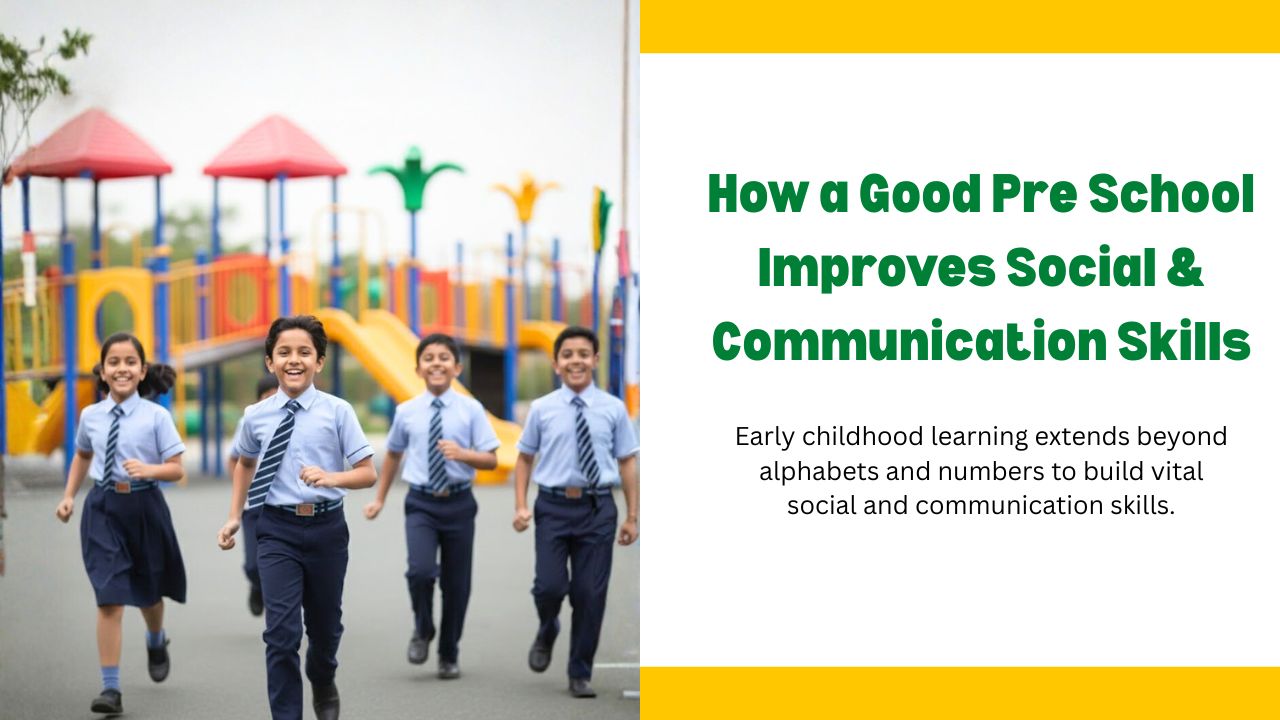
In early childhood, learning is not limited to alphabets and numbers. Social and communication skills play an equally important role in shaping a child’s personality and future success. The ability to express feelings, listen to others, and interact confidently begins developing at a very young age. A good pre school provides a structured yet nurturing environment where children feel safe to speak, share, and build relationships. Through guided interaction, play-based learning, and supportive teachers, pre schools help children develop confidence, emotional awareness, and healthy communication habits that stay with them for life.
Why Social & Communication Skills Matter in Early Childhood
Social and communication skills form the foundation of how children understand the world around them. Skills like listening, speaking, sharing, and working with others help children express emotions and build self-confidence. When children learn to communicate clearly, they are better able to ask questions, follow instructions, and participate actively in learning.
These abilities also support emotional intelligence—understanding feelings, showing empathy, and managing reactions. Strong social skills in early childhood are closely linked to better academic performance, stronger friendships, and positive behaviour as children grow older.
Role of a Pre School in a Child’s Social Development
A pre school is often a child’s first experience of structured social interaction outside the family. In this setting, children learn how to interact with peers of the same age through daily routines and group activities.
Classroom environments encourage cooperation, patience, and respect for others. Children naturally learn turn-taking, problem-solving, and empathy by observing and interacting with their peers. These experiences help them adapt to group settings and develop a sense of belonging.
How Pre Schools Help Children Communicate Better
Pre schools focus on daily communication in a natural and engaging way. Teachers interact continuously with children through conversations, questions, and encouragement. Activities like storytelling, show-and-tell, role play, and rhymes help children expand vocabulary and improve clarity of speech.
Regular interaction with teachers and classmates boosts confidence in speaking. Children gradually learn how to express ideas, listen attentively, and respond appropriately—essential skills for effective communication.
Learning Through Play: The Key to Natural Interaction
Play-based learning is one of the most effective ways to develop social and communication skills. Games, puzzles, and group activities encourage children to talk, share ideas, and collaborate.
Through play, children learn how to negotiate, solve problems together, and express opinions without fear. This natural interaction helps even shy children open up gradually, making learning enjoyable and stress-free.
Importance of Teacher Guidance & Classroom Environment
Trained teachers play a crucial role in guiding social behaviour. They create a safe, supportive environment where every child feels heard and valued. Teachers gently encourage shy children to participate and help manage group discussions respectfully.
A positive classroom environment builds trust and confidence, allowing children to express themselves freely. Consistent guidance helps children understand boundaries while promoting independent thinking and communication.
Group Activities That Boost Confidence & Teamwork
Group activities are essential for building teamwork and confidence. Circle time discussions, art and craft projects, music and dance sessions, and outdoor play encourage bonding among children.
These activities teach cooperation, patience, and mutual respect. Working together toward a common goal helps children feel included and confident, strengthening both social and emotional skills.
How Early Communication Skills Prepare Children for Future Schooling
Children with strong communication skills adapt more easily to primary school. They listen better, follow instructions, and participate actively in class discussions. Early exposure to structured communication also enhances emotional intelligence, helping children manage transitions and challenges confidently.
These skills make children more comfortable in new environments, improving academic readiness and classroom behaviour in later years.
Why Parents Prefer Quality Pre Schools for Overall Personality Development
Parents today look beyond basic education. They seek pre schools that support overall personality development, visible behavioural improvement, and confident communication. A quality pre school offers structured learning combined with emotional and social growth.
When parents see positive changes in their child’s confidence, expression, and interaction, it reinforces trust in the learning environment and teaching approach.
Why Laureate High School Focuses on Strong Social & Communication Skills
Laureate High School follows a child-centric approach that prioritizes holistic development. Interactive teaching methods, caring educators, and activity-based learning help children express themselves confidently. The focus on communication, emotional growth, and social interaction ensures that children develop strong foundations alongside academic readiness in a supportive and nurturing environment.
Give your child the confidence to speak, share, and connect with the world. Enroll your child at Laureate High School and provide a nurturing pre school environment that builds strong social and communication skills from the very beginning.
Contact today to learn more about admissions or to schedule a campus visit.
Follow Us On Instagram:- @laureatehighschool