⚡ Quick Answer
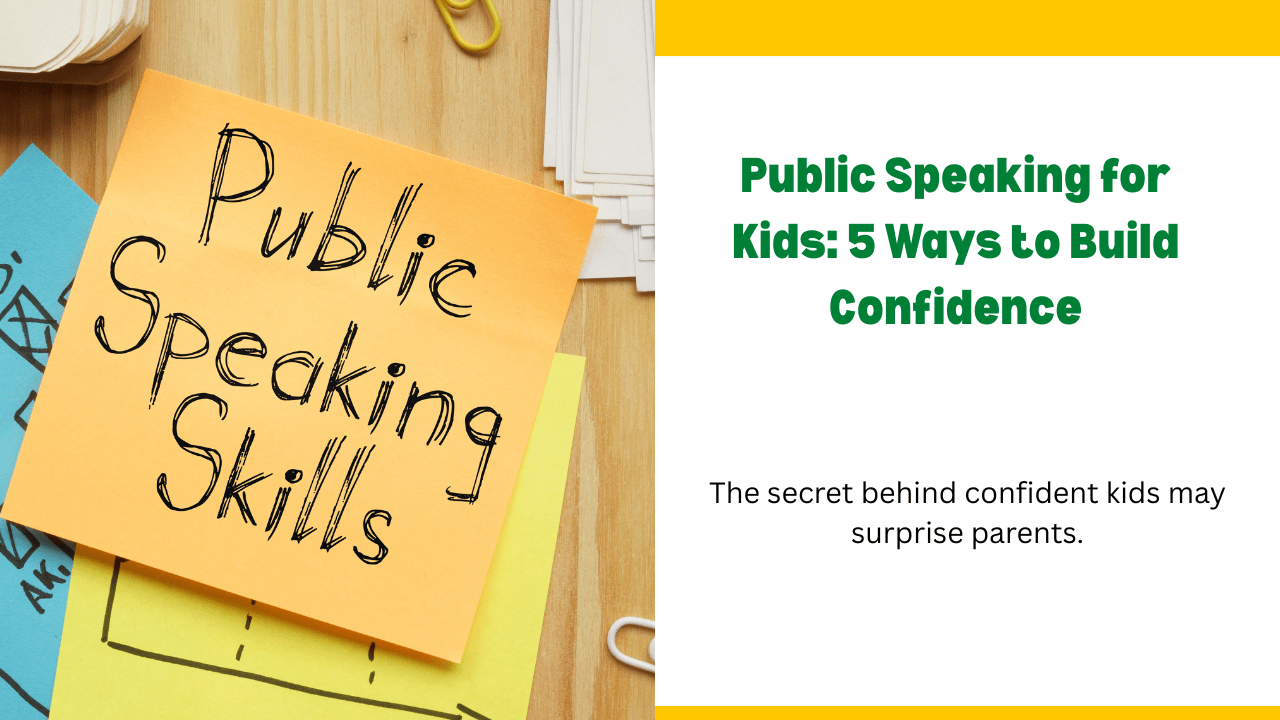
Public speaking for kids is the skill of expressing ideas clearly and confidently in front of an audience — and it is built through small, regular practice, not natural talent. Children gain stage confidence by starting with short talks at home, practising in front of family, focusing on one idea at a time, and treating nervousness as normal. Most kids show visible improvement within a few weeks of consistent practice.
Many parents assume confident speakers are simply born that way. The truth is more encouraging: public speaking for children is a learnable skill, and stage confidence for kids grows with practice. With the right support, almost any child can speak up clearly — and learning how to improve communication skills in kids early helps them in classrooms, interviews, and life far beyond school.
🌟 Why Public Speaking Matters for Kids
Public speaking builds far more than the ability to talk on stage — it is one of the strongest ways to develop communication skills for kids. It sharpens clear thinking, self-confidence, and the courage to share ideas. Strong speaking skills for students lead to more class participation, better presentations, and easier self-expression. These are lifelong abilities that support both academic and personal growth.
🎤 How to Build Stage Confidence: 5 Simple Steps
Start Small at Home
Let your child talk for two minutes about a favourite toy, food, or movie. A familiar topic removes pressure and builds early wins.
Practise in Front of Family
A small, friendly audience is the perfect training ground. Clap, smile, and encourage — never correct mid-speech.
Focus on One Idea at a Time
Teach a simple structure: a beginning, one main point, and an ending. Clear and short always beats long and complicated.
Treat Nervousness as Normal
Explain that even adults feel butterflies. A few slow breaths before speaking turns nerves into energy.
Praise Effort, Not Perfection
Celebrate that they tried. Confidence grows when children feel safe to make mistakes and try again.
🏠 Easy Activities to Practise at Home
Practice does not need a stage. These simple public speaking activities for kids double as confidence-building activities for children, making speaking feel fun and natural:
📖 Read a story aloud
🎭 Pretend interviews
📰 Daily news minute
🪞 Mirror practice
✅ Pro Tip: Record a short video of your child speaking once a week. Watching their own progress is one of the fastest ways to build belief in themselves.
❓ Frequently Asked Questions
Q1. At what age can kids start learning public speaking?
Children can begin around age 5 with simple activities like show-and-tell. Structured practice works well from age 7 onwards, once they can follow a basic beginning-middle-end format.
Q2. How can I help my shy child speak in public?
Start with one-on-one talks at home, keep topics familiar, and praise every attempt. Gradually add small audiences. Shy children build confidence best through gentle, pressure-free repetition.
Q3. How do kids overcome stage fear?
Kids overcome stage fear through preparation, slow breathing, and practice in front of friendly audiences. Reminding them that nervousness is normal — even for adults — helps reduce pressure.
Q4. How long should a child’s first speech be?
A first speech should be just 1–2 minutes on a familiar topic. Short, successful talks build momentum far better than long, stressful ones.
Q5. How often should kids practise public speaking?
Three to four short sessions a week are enough to build steady progress. Consistency matters far more than long, occasional practice.
Q6. Does public speaking improve school performance?
Yes. Children who practise public speaking often participate more in class, present assignments confidently, and communicate ideas more clearly, which supports overall academic growth.
✅ Key Takeaways
- Stage confidence is a learnable skill, not a natural talent
- Start small at home with short, familiar topics
- Praise effort over perfection to build self-belief
- Practise 3–4 short sessions a week for steady progress
- Public speaking supports confidence, communication, and academics for life
Help Your Child Find Their Voice in Udaipur 🎓
At Laureate High School, Hiran Magri, Udaipur, we nurture confident communicators through activities, clubs, and stage opportunities that bring out the best in every child.