Good personal hygiene is one of the most important life skills we can teach children. It goes beyond looking neat and tidy—hygiene helps kids stay safe from infections, boosts their self-confidence, and builds habits that last a lifetime. For parents, guiding children toward healthy routines may sometimes feel challenging, but with patience and the right strategies, it can become second nature.
In this blog, we’ll explore 10 essential personal hygiene tips for kids that are easy to follow, fun to learn, and practical for daily life. From handwashing to healthy eating, these tips will help your child grow into a healthy, responsible individual.
1. Regular Hand Washing
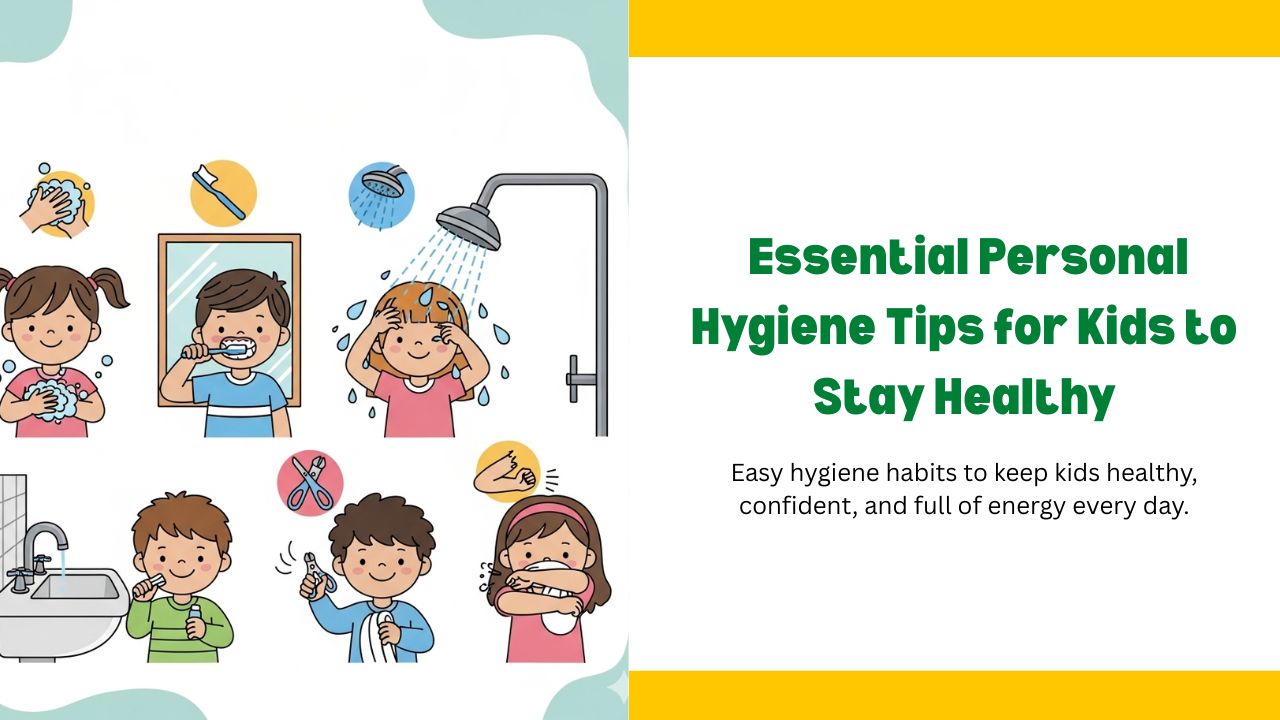
Hand washing is the first line of defense against germs. Children should wash their hands:
- Before meals
- After using the toilet
- After playing outside or touching pets
Practical tip: Teach your child to sing a short rhyme or the “Happy Birthday” song while washing hands—this ensures they scrub for at least 20 seconds. Parents can also make handwashing fun by using colorful soaps or stickers as rewards.
2. Brushing Teeth Twice Daily
Oral hygiene is essential for healthy gums and teeth. Kids should brush twice daily—morning and night—using a child-friendly toothbrush and fluoride toothpaste.
Parent tip: Show children the correct technique—gentle circular motions covering all sides of the teeth. Encourage flossing for older kids. Making brushing a family activity can motivate children to copy good habits.
3. Bathing Regularly
A daily bath keeps skin fresh, removes dirt, and prevents infections. Bathing also helps children relax and sleep better.
How to make it fun:
- Use bath toys or colorful sponges for younger kids.
- Teach them to wash underarms, neck, and behind ears properly.
- Let them choose their favorite soap or shampoo scent.
4. Keeping Nails Clean and Trimmed
Dirt under nails can carry germs and cause stomach infections when kids bite or scratch. Keeping nails clean and trimmed is simple but vital.
Parent tip: Trim nails once a week, preferably after a bath when nails are softer. Encourage older children to use a small nail brush while washing hands.
5. Wearing Clean Clothes
Clothes can trap sweat, dirt, and bacteria. Wearing fresh, clean clothes daily prevents skin irritation and helps children feel more confident.
Child responsibility idea: Teach kids to put dirty clothes in a laundry basket. Older children can help fold their washed clothes, making them more aware of cleanliness.
6. Hair Care
Healthy hair requires regular washing and daily combing. Unwashed hair can attract lice and dirt, leading to itching or scalp infections.
Fun learning tip: Encourage children to name their comb or brush and “take care of it” daily. Parents can set a routine—washing hair 2–3 times a week depending on the weather.
7. Proper Toilet Hygiene
Toilet habits are a key part of independence and cleanliness. Teach children to:
- Wipe properly from front to back
- Wash hands thoroughly afterward
- Flush every time they use the toilet
Parent role: Supervise younger kids while allowing them to build confidence in handling their hygiene independently.
8. Healthy Eating and Hydration
Personal hygiene isn’t just external—it also comes from within. A balanced diet and enough water support healthy skin, strong teeth, and overall well-being.
Parent tip: Provide fresh fruits, vegetables, and water instead of sugary drinks. Involve kids in meal preparation to teach them about food hygiene and clean eating.
9. Covering Mouth While Coughing/Sneezing
Simple hygiene etiquette—like covering the mouth with a tissue or elbow while coughing or sneezing—prevents the spread of germs.
Fun idea: Practice this as a “superhero move” with your child, showing how covering their mouth protects others just like a hero protects people.
10. Encouraging Personal Responsibility
Ultimately, hygiene is a habit that children must learn to take responsibility for. Parents can:
- Lead by example (children copy what they see)
- Create fun routines and hygiene charts
- Praise consistency to build motivation
When kids understand that cleanliness makes them feel good and stay healthy, hygiene becomes a natural part of their daily lives.
Conclusion
Good hygiene is more than a routine—it’s the foundation of a child’s health, self-esteem, and social well-being. By following these personal hygiene tips for kids, parents can instill habits that protect their children today and benefit them throughout their lives.
At Laureate High School, we believe education extends beyond academics. We nurture children with healthy habits, confidence, and holistic development in a caring environment. Parents who want their children to grow into responsible, healthy individuals are invited to explore our programs and admissions.
Follow Us On Instagram:- @laureatehighschool