Parenting & Child Development
How Better Sleep Improves Your Child’s Learning and Growth
A practical guide for parents in Udaipur — because what happens after school matters just as much as what happens during it.
● Child Development
● Ages 3–12
As parents, we spend a great deal of time choosing the right school, the right diet, and the right activities for our children. But one of the most important habits for healthy growth often gets overlooked — a consistent bedtime routine.
Research shows that children who follow a structured nighttime routine sleep faster, wake up fresher, and perform significantly better in school the very next day. What happens after school hours — especially at bedtime — plays a major role in how well children learn, focus, and retain information.
Why Does a Bedtime Routine Matter for Children?
Children thrive on predictability. When the brain knows what to expect, it naturally begins to relax and prepare for rest. A proper bedtime routine signals the body to release melatonin — the sleep hormone — at the right time, helping children fall asleep faster and enjoy deeper, more restorative sleep.
Poor Sleep
Leads to irritability, lack of focus, weakened immunity, and reduced memory retention in children.
Good Sleep
Better concentration, emotional regulation, stronger social skills, and faster learning every day.
Children who arrive well-rested are more engaged, curious, and ready to absorb new concepts throughout the day.
Building a bedtime routine is not about being strict — it is about being consistent. Here are seven tips that actually work.
The Complete Guide
7 Bedtime Routine Tips
Every Parent Should Follow
Set a Fixed Bedtime Every Night
The single most important step is to set a consistent sleep time — and stick to it every night, including weekends. Children between the ages of 3 to 6 need 10 to 12 hours of sleep, while those aged 6 to 12 need 9 to 11 hours.
When bedtime is consistent, your child’s internal body clock adjusts automatically. Within a few weeks, you will notice they begin feeling sleepy around the same time without you having to remind them.
✓ This consistency also makes school mornings far less chaotic for the entire family.
Switch Off Screens at Least One Hour Before Bed
Tablets, smartphones, and television emit blue light that suppresses melatonin and keeps the brain in an alert, stimulated state. Even educational content or cartoons can overstimulate a young child’s mind.
Make a family rule: all screens go off at least 60 minutes before bedtime. Replace screen time with calm activities such as reading, coloring, or light conversation about the day.
⚠ Blue light from screens delays melatonin release by up to 2 hours.
Make a Warm Bath Part of the Routine
A warm bath 30 to 45 minutes before bed works wonders for children. The rise and subsequent fall in body temperature after a warm bath naturally signals the brain that it is time to sleep. It also helps wash away the energy of the day, both physically and mentally.
Keep the bath calm and relaxed. Avoid splashing games or high-energy play. Use this time to quietly talk to your child about one good thing that happened during the day — it builds emotional connection and sets a peaceful tone for the night.
Include a Bedtime Story or Reading Session
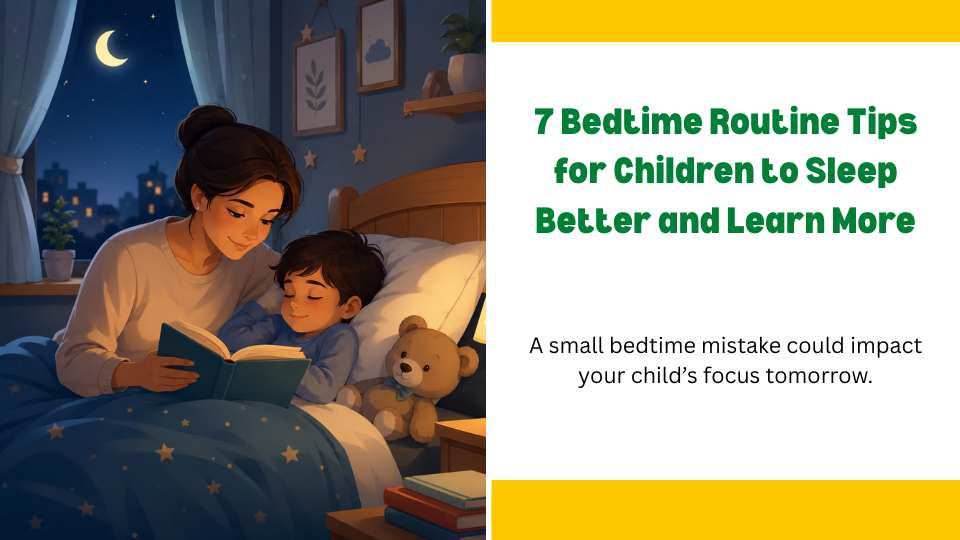
Reading before bed is one of the most powerful gifts you can give your child. A nightly story or reading session builds vocabulary, sparks imagination, strengthens comprehension, and nurtures a lifelong love for books.
For younger children in nursery or preschool, choose picture books with simple, soothing stories. For older primary school children, let them read to you or choose a chapter book they enjoy.
📚 Even 10–15 minutes of reading before sleep significantly improves language skills and academic performance over time.
Laureate High School, Udaipur
Build a Strong Foundation for Your Child’s Future
Give your child the right environment to learn, grow, and succeed.
At Laureate High School, we focus on academic excellence, healthy habits, and holistic child development from the early years onward.
Create a Calm and Comfortable Sleep Environment
Your child’s bedroom environment has a direct impact on sleep quality. Keep the room cool, dark, and quiet. Use light curtains or blackout blinds if street lights disturb sleep. A small dim night light is perfectly fine for children who are afraid of the dark.
Sleep Environment Checklist
Practice a Short Relaxation Exercise
Teaching your child a simple relaxation technique before sleep can be transformative. Deep breathing, a short body scan, or a simple gratitude exercise are all highly effective and take less than five minutes.
🧐 Try This Tonight
Ask your child to close their eyes, take 3 slow deep breaths, then think of 3 things they are grateful for from the day. This calms the nervous system and creates a positive emotional state before sleep.
At Laureate High School, we include yoga and meditation as part of our curriculum — starting these practices at home reinforces this benefit beautifully.
Talk, Connect, and End on a Positive Note
Before your child drifts off to sleep, spend five quiet minutes talking with them. Ask about their favorite part of the day, something they are looking forward to tomorrow, or a friend they enjoyed playing with.
Avoid discussions about homework, discipline, or anything stressful at bedtime. This nightly connection ritual builds trust, emotional security, and a sense of being loved.
❤ Children who feel emotionally connected to their parents at bedtime wake up more positive, confident, and ready to engage with their school day.
Final Thoughts
Building a bedtime routine does not have to be complicated. Start with one or two changes — a fixed sleep time and switching off screens early — and gradually add more elements over a few weeks. Consistency is the key.
Within a month, you will notice a remarkable difference in your child’s mood, energy, focus, and performance at school. The best schools in Udaipur understand that education does not begin and end within school walls — what parents build at home is equally important.
Got Questions?
Frequently Asked Questions
What is the ideal bedtime for preschool children in Udaipur?
Most child development experts recommend that preschool children should be in bed between 7:30 PM and 8:30 PM to ensure they get the 10 to 12 hours of sleep their growing brain needs. Since most schools in Udaipur begin early in the morning, an early bedtime ensures children wake up naturally, refreshed, and ready to learn.
How long should a bedtime routine take for young children?
A well-structured bedtime routine should take between 20 to 45 minutes from start to finish. This includes winding-down steps like a warm bath, brushing teeth, a short story, and a few minutes of quiet talk. Keep it the same every night so your child’s brain begins to associate these steps with sleep.
My child comes home tired after school — should I allow an evening nap?
For children aged 5 and above, no evening nap after 4 PM. A nap this late disrupts the nighttime sleep schedule significantly. Instead, allow a quiet 20-minute rest with soft music or a book — this refreshes the child without affecting their ability to fall asleep at their regular bedtime.
How does poor sleep affect a child’s performance at school?
Children who sleep poorly show noticeably lower concentration, weaker memory retention, and more emotional outbursts in the classroom. Sleep is when the brain consolidates everything learned during the day — without adequate sleep, even the best teaching cannot produce strong results.
Is reading on a tablet or phone okay for bedtime?
Physical books are strongly preferred over tablets or phones at night. Screens emit blue light that suppresses melatonin and delays sleep onset even when the content is calm and educational. Keep a small bookshelf near your child’s bed and make choosing a physical book part of the nightly routine for the best results.
Admissions Open 2026–27
Your child deserves the best start — at school and at home.
At Laureate High School — the best pre school in Hiran Magri, Udaipur — great education is a partnership between dedicated teachers and mindful parents.
Our holistic approach to child development goes beyond textbooks to nurture every aspect of your child’s growth.
Seats are limited. Enroll early to secure your child’s place.
Read More: